
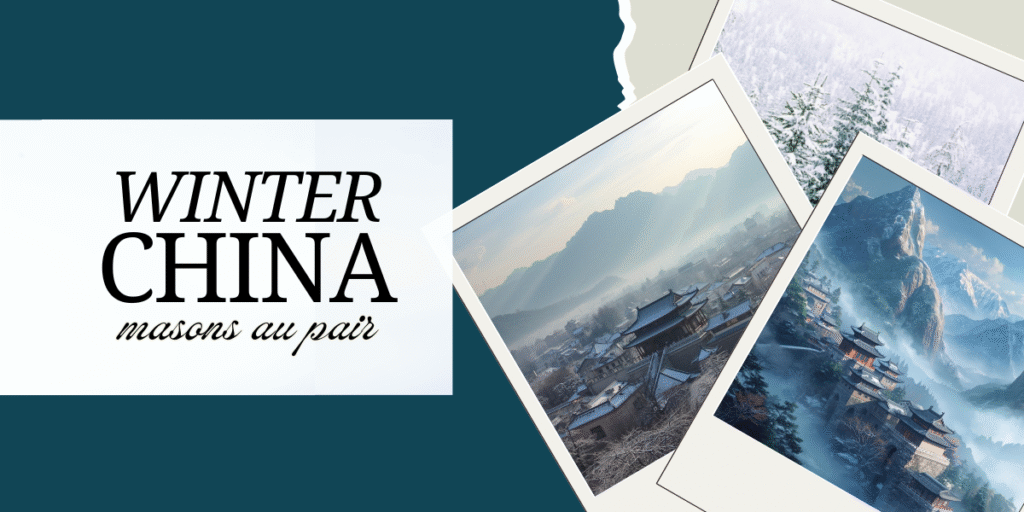
Embarking on a journey to experience Winter in China is perhaps the most challenging yet rewarding decision an aspiring au pair can make. Unlike the familiar festive season in American culture or Europe, winter in the Middle Kingdom is a deep dive into a completely different civilization. For any international student or participant in a homestay program, this season is not just about the weather—it is a masterclass in Chinese culture, family bonding, and ancient history.
Whether you are looking to improve your Mandarin, bond with your host family, or explore snowy landscapes that look like traditional ink paintings, winter offers a unique backdrop. It is the season when the country transforms, revealing the true soul of Chinese people through time-honored customs and vibrant festivals. It is a time when the modern world slows down, allowing the wisdom of the ancient Chinese to dictate the rhythm of daily life.
1. The Climate Reality: What an Au Pair Needs to Know
China is massive, and winter varies drastically depending on your placement. Understanding this geography is vital for your packing list and your daily comfort during your study-abroad or au pair year.
The Frozen North (Harbin, Beijing, Jilin)
In the north, winter is defined by crisp blue skies, heavy snowfall, and sub-zero temperatures. However, life indoors is incredibly comfortable. Thanks to the robust infrastructure, apartments have powerful central heating. You will often see locals practicing martial arts or Tai Chi in the parks early in the morning, their breath visible in the cold air, showcasing the resilience of the traditional Chinese lifestyle. Exploring the palaces of the Qing dynasty under a blanket of snow is a visual memory that will last forever.
The Humid South (Shanghai, Guangzhou, Chengdu)
South of the Yangtze River, the winter is shorter but can feel penetratingly cold due to the high humidity. Here, you might not see snow, but you will experience a different side of the culture. Families wear thick, quilted loungewear at home because there is no central heating. The food changes too—you might swap wheat noodles for Cantonese style soups and rice dishes designed to warm the body from the inside out.
2. Dongzhi Festival: The Arrival of Winter
Before the New Year celebrations begin, there is Dongzhi (the Winter Solstice). This is often the first major cultural event an au pair encounters in winter. It marks the shortest day of the year and the return of longer daylight.
In the north, it is a strict custom to eat dumplings (Jiaozi) to prevent your ears from freezing—a charming bit of folk wisdom passed down through generations. In the south, families eat Tangyuan, sweet glutinous rice balls that symbolize family reunion. Participating in this meal with your host family is a simple yet powerful way to show you respect their customs and want to be part of the lineage.
3. The Lunar New Year: The Heart of the Winter Season
The absolute highlight of your stay will be the New Year festival, also known as the Spring Festival. Unlike the fixed Gregorian calendar used in the West, this holiday follows the Lunar calendar, meaning the dates shift every year (usually late January or early February).
For an au pair, this is the "Super Bowl" of cultural integration. It is a time of reunion. You will likely travel with your host family to their hometown, offering a rare glimpse into authentic folk life that tourists never see. The entire Lunar-month is filled with specific activities.
Traditions You Will Participate In:
- Decorations: You will help your host kids hang red couplets and "Fu" characters upside down on doors. The color red symbolizes luck, joy, and prosperity.
- The Ancestors: Many families will pay respect to their ancestors during this time, a solemn ritual that grounds the celebration in history and filial piety.
- The Reunion Dinner: Held on the eve of the New Year, this is the most important meal. You will likely help make dumplings (Jiaozi), a ritual that dates back to ancient Chinese times.
- Red Envelopes (Hongbao): On the first-day of the New Year, elders give money to children. As an au pair, you are often treated as family and might receive one too!
- Taboos: You will learn that sweeping the floor on the first day is forbidden, as you might sweep away the new luck!
4. Winter Wellness: How to Stay Healthy Like a Local
Winter in China is also a lesson in traditional health. Chinese culture places huge emphasis on balancing "Yin" and "Yang" energy. You will notice your host parents drinking hot water constantly—never cold water, which is believed to be bad for digestion in winter.
You might be introduced to foot baths with ginger and mugwort before bed, a traditional remedy to boost circulation. Adopting these habits is not only good for your health but is also a fantastic way to bond with your host mom and practice your Mandarin vocabulary regarding health and wellness. It shows you are embracing the Chinese people's way of life.
5. Myths and Legends: Understanding the Context
To truly connect with your host children, learn the stories behind the season. The Chinese Zodiac plays a huge role. Every year is associated with an animal (like the Dragon, Snake, or Tiger). Knowing your own sign and the sign of the current year is a fantastic conversation starter in Mandarin.
During the festivities, you will witness the spectacular Lion dance and Dragon dance in the streets. These performances are not just entertainment; they are deeply rooted in history, often performed to honor ancestors or local deities. Explaining these concepts to your friends back home will make you realize how much you have learned about Chinese culture.
6. Winter Travel: Walking Through History
Winter is arguably the best time to visit historical sites because the crowds are thinner. Imagine walking through the Forbidden City in Beijing when it is dusted with snow. You can almost feel the presence of a past Emperor from the Qing dynasty walking the same paths.
Other locations offer a glimpse into the Republic of China era architecture or ancient temples nestled in the mountains. Visiting these sites during the quiet winter months allows for a more spiritual and reflective experience. For the adventurous au pair, a trip to Harbin for the Ice and Snow Festival is mandatory—it is a frozen world of neon lights and massive sculptures that defies imagination.
7. The Lantern Festival: The Grand Finale
The winter celebrations conclude with the Lantern Festival. This marks the first full moon of the new Lunar-month. Parks are filled with colorful, glowing lanterns of all shapes and sizes. Eating "Tangyuan" (sweet glutinous rice balls) is the custom here, symbolizing family unity and completeness. You might also try solving the riddles written on the lanterns, a classic intellectual game that tests your language skills.
8. Why Winter makes the Best Au Pair Experience
Many people choose summer for their gap year, but winter is where the real bonding happens. The cold weather keeps families indoors, leading to more movie nights, more cooking together, and more shared conversations.
Living through a Chinese New Year celebration with a local family is an honor. It bridges the gap between being a stranger and being a daughter or son. You learn the nuances of rituals, you understand the importance of lineage and respect, and you see the modern China alongside the ancient Chinese traditions.
Conclusion
Winter in China is complex, vibrant, and unforgettable. It challenges you to adapt, to learn, and to embrace a world where the Gregorian calendar takes a backseat to centuries of tradition.
If you are ready for a rewarding experience that goes far beyond a typical home stay, winter is your time. Don't let the cold stop you. Join Masons Au Pair, pack your warmest coat, and get ready to celebrate the most authentic Chinese New Year of your life.