
Category: Au Pair Safety & Technology • Topic: Autonomous Vehicles & Future Mobility • Reading Time: 35 Minutes
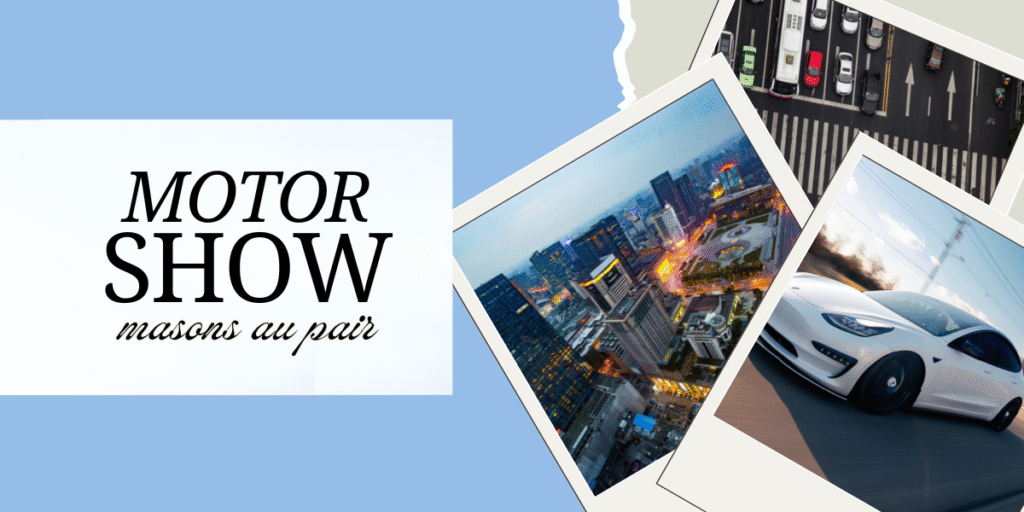
The Chengdu Motor Show 2025 (CDMS) is not just a display of shiny metal; it is a masterclass in the future of autonomous vehicle technology. For an au pair in China, understanding this revolution is critical. Why? Because your host family likely entrusts you with their most precious passengers: their children. In modern China, the family car is becoming a high-tech robot designed to eliminate human error and prevent accidents.
At the Western China International Expo City, you will witness how the global auto-industry is transitioning from traditional driving cars to a world of driverless vehicles. This guide helps you navigate the show, understand the sophisticated driving technology, and converse with your host parents about the safety features that protect you on the public roads.
The Au Pair Perspective: Why Safety Tech Matters
Driving in a foreign country can be stressful. The automated systems you will see at the show—like lane keeping and emergency braking—are there to assist you. This guide bridges the gap between complex driving technologies and your daily responsibility of school runs and weekend trips.
1. The Safety Revolution: Reducing Fatalities on Public Roads
The most compelling argument for self driving cars is safety. Research from the National Highway Traffic Safety Administration (NHTSA) in the US and similar bodies in China shows that the vast majority of fatalities are caused by human mistakes.
As an au pair, you are often driving cars filled with distracted children. Cars with advanced safety features act as a second pair of eyes.
- Distracted Driving Prevention: New driving systems monitor your eyes. If you look away from the road to check on a crying child, the car will alert you.
- Pedestrians and Intersections: Navigating a busy intersection in Chengdu is tricky. Automated cars use sensors to detect pedestrians and cyclists that you might miss, braking instantly to avoid tragedy.
- Highway Traffic Safety: On long road trips, highway traffic can be dangerous. Vehicle automation manages your speed and distance, reducing the risk of high-speed collisions.
2. The Evolution: From DARPA to Your Driveway
To impress your host dad, it helps to know the history. The autonomous car didn't appear overnight. It started decades ago with challenges funded by DARPA and early prototypes like the Google car in Silicon Valley.
Today, Chinese automakers have taken that foundation and accelerated it. At the show, you won't just see prototypes; you will see production automobiles ready for the road.
- From Science to Street: What used to be experimental robotics is now standard in the family SUV.
- The New Standard: Features that were once considered "Sci-Fi" are now basic driver assistance expectations for Chinese families.
3. Driving Levels: Who is Holding the Steering Wheel?
One of the most confusing aspects for an au pair is knowing how much the car can do autonomously. Does the car drive themselves? The industry uses levels 0 to 5.
| Level | Name | Au Pair Context |
|---|---|---|
| Level 2 | Driver Assistance | Hands on the steering-wheel. The car helps with steering and braking, but you are in charge behind-the-wheel. |
| Level 3 | Conditional Autonomy | The car handles highway traffic. You can take your hands off, but must be ready to intervene if the system requests. |
| Level 4 | High Automation | Driverless cars in specific zones. The car handles everything; you are just a passenger. |
| Level 5 | Full Autonomy | No steering wheel. A true driverless vehicle. Still a future concept for public roads. |
4. Tesla vs. The World: Musk's Influence in China
You cannot talk about self driving vehicles without mentioning Elon Musk and Tesla. The Tesla Model Y is one of the most popular cars for host families in China.
At the show, you will see how Chinese brands compare to Tesla's famous Autopilot.
- Vision vs. Lidar: Musk relies on cameras (Artificial-intelligence vision). Chinese brands like XPeng use Lidar (lasers). Ask your host family which driving system they prefer!
- Volvo's Legacy: Volvo has always been synonymous with safety. Their partnership with Geely means many Chinese cars now share Volvo’s rigorous safety DNA, focusing on protecting every passenger.
5. The Future of Transport: Taxis and Robots
Will au pairs eventually stop driving? The future of mobility suggests yes.
Instead of hailing a traditional taxi, you might soon order an unmanned Robotaxi to take the kids to piano lessons. At the show, look for the "Future Mobility" zone where robots on wheels are displayed. These automated vehicles are designed to function without anyone behind-the-wheel, reducing the stress of city driving.
6. Vocabulary for the Auto Show
Use these terms to engage with sales staff and your host family about their automobiles.
- Automaker (Qìchē zhìzào shāng): The company building the car.
- Artificial-intelligence (Réngōng zhìnéng): The brain of the car.
- Full Autonomy (Quán zìdòng): No human needed.
- Intervene (Jièrù): Taking control back from the car.
- Other vehicles (Qítā chēliàng): How the car sees traffic around it.
Conclusion: Embracing the Future of Au Pair Life
The Chengdu Motor Show 2025 proves that the future of driving cars is changing. Autonomous cars and driving technologies are not just buzzwords; they are tools that make your life as an au pair safer.
By understanding vehicle automation, you show your host family that you care about the safety of their children on public roads. Whether you are driving a Tesla model or a local self driving vehicle, you are ready for the road ahead.