
Traveling to China for the first time is an unforgettable journey through thousands of years of history and culture.
This vast and diverse country—home to more than 1.4 billion Chinese people—offers a breathtaking mix of ancient China and modern innovation. From the Great Wall, built during the Qin dynasty, to the majestic palaces of the Ming and Qing dynasties, every corner reveals traces of a civilization that shaped Asia for millennia. The traditions of Confucianism and Buddhism still echo in temples and gardens, while the mighty Yangtze River and the Grand Canal continue to link China’s past and present.
Whether you’re exploring the historic hutongs of Beijing, admiring the futuristic skyline of Shanghai, or hiking through rice terraces and bamboo forests in southern provinces, China immerses you in contrasts—between imperial history and cutting-edge technology, between peaceful countryside and buzzing megacities. Every region, from North China to Sichuan and Tibet, offers its own story shaped by dynasties, art, and philosophy.
For many young travelers, discovering China today means more than sightseeing. It’s a chance to live like a local—through an au pair program, a Mandarin language immersion, or a study abroad exchange. These experiences let you connect with host families, embrace cultural traditions, and develop cross-cultural skills rooted in everyday Chinese life. But in a country as vast and diverse as this, choosing the right city for your adventure is key: your destination will define your friendships, your learning, and the memories you’ll carry home.
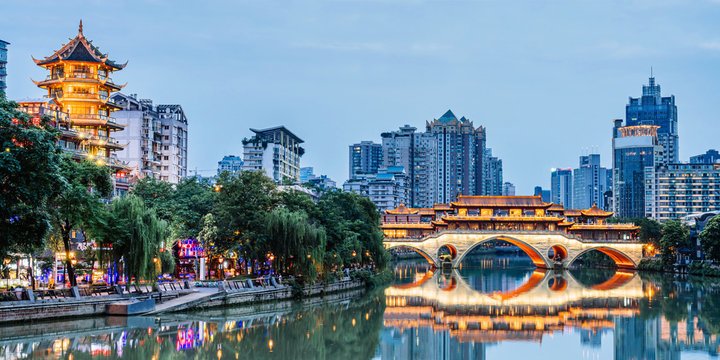
Each city in China has its own unique rhythm and charm—but one place stands out as the perfect introduction to both ancient and modern Chinese culture: Chengdu. Warm, welcoming, and deliciously spicy, Chengdu embodies everything an international au pair, student, or explorer could dream of. In this guide, we’ll take you through the top 5 best cities in China—starting with the one we believe captures the true spirit of Chinese civilization: Chengdu, the cultural heart of modern China and an ideal place to begin your journey.
1.Chengdu – The Best City in China for Au Pairs and Culture Seekers
If you’re looking for the perfect city to begin your au pair journey in China, Chengdu should be at the very top of your list.
Located in the heart of Sichuan province, this ancient yet modern metropolis has been a center of Chinese civilization since the Han and Tang dynasties. Today, it’s best known as the home of giant pandas, but Chengdu’s real charm lies in its deep cultural roots—its Buddhist temples, Confucian heritage, and the relaxed pace of life that locals have preserved for centuries. The Yangtze River flows nearby, nourishing fertile plains that have supported farmers, poets, and philosophers since ancient China.
As an au pair in Chengdu, you won’t just visit historical landmarks—you’ll live the rhythms of everyday Chinese family life. You’ll share traditional Sichuan meals, help children practice English or Mandarin, and take part in cultural rituals that reveal the true heart of China. On weekends, you can sip jasmine or oolong tea in centuries-old teahouses, join locals practicing tai chi in leafy parks, or wander through narrow hutongs lined with hotpot restaurants, night markets, and small artisan shops selling Chinese art and ceramics. This quiet immersion—authentic, warm, and human—offers an experience no short trip could match.
What truly sets Chengdu apart is its perfect balance between tradition and modernity. Despite being one of China’s fastest-growing cities, Chengdu has retained its calm, friendly rhythm. It’s often ranked among the country’s most livable cities, thanks to its open-minded people, slower lifestyle, and dedication to preserving Chinese culture. For newcomers, this makes it easy to adapt, practice spoken Mandarin Chinese, and absorb the cultural nuances that shape everyday life. Locals are famously welcoming and curious about foreign guests—always eager to share stories about Chinese history, offer travel tips, or invite you for a steaming bowl of mapo tofu.
Beyond its peaceful charm, Chengdu is also a thriving creative hub where ancient and modern arts meet. Au pairs and international students can take part in calligraphy, dumpling-making, kung fu, or traditional Chinese dance classes. Others explore the art of cloisonné enamel painting, a technique that dates back to the Ming dynasty. Through these workshops, you’ll discover not just artistic skills but also the philosophy of balance and harmony that runs deep in Chinese thought—from Confucianism to Daoism.
At Masons Au Pair, many of our participants describe Chengdu as their second home—a city where they felt safe, supported, and inspired to grow. For those seeking more than tourism—for those who want to live, learn, and build meaningful human connections—Chengdu isn’t just a destination. It’s the beginning of a life-changing adventure and the ideal place to experience the soul of China firsthand.
2. Beijing – Dive Into China’s Imperial and Political History
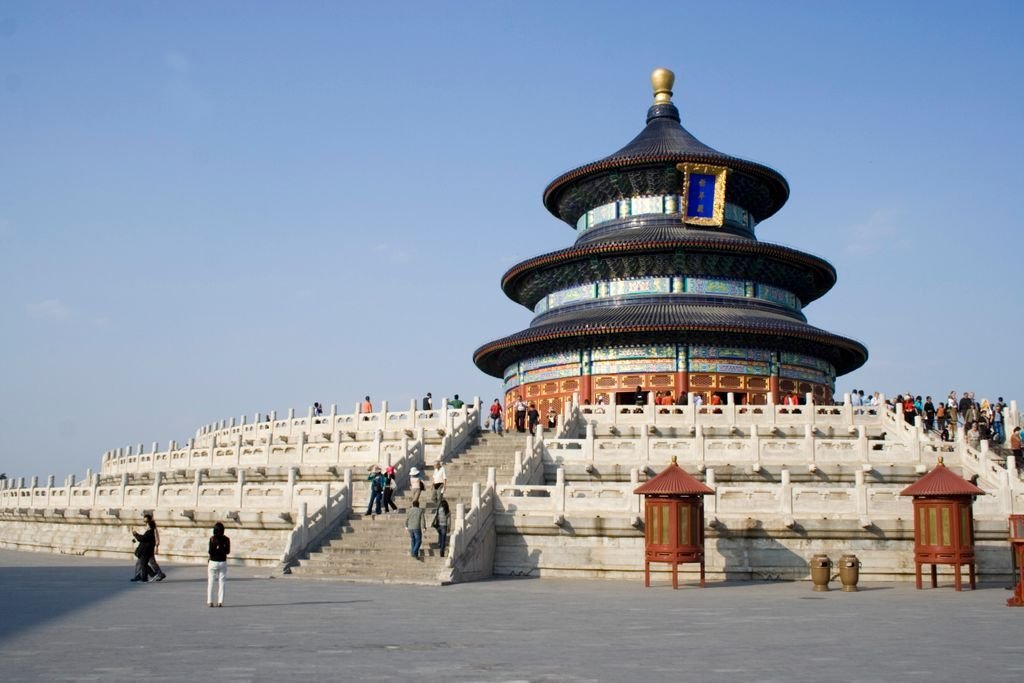
Beijing, the capital of China, is without a doubt one of the most iconic and historically rich cities in the world. With a legacy stretching back more than 3,000 years, Beijing stands as a living museum of Chinese civilization and the cradle of imperial China. For centuries, it served as the political and spiritual heart of the nation—home to the Ming and Qing dynasties, whose emperors ruled according to the teachings of Confucianism, Taoism, and Buddhism. For any first-time traveler eager to understand the foundations of ancient Chinese culture, Beijing is an essential stop.
Here, history and grandeur merge at every corner. You can walk through the majestic Forbidden City, once the private palace of Chinese emperors, with its golden roofs, marble courtyards, and carved dragons symbolizing imperial power. You’ll climb the legendary Great Wall of China, winding across the mountains north of the capital, and visit the Temple of Heaven, where emperors once prayed for prosperous harvests in elaborate Confucian ceremonies. Just a few kilometers away lies Tiananmen Square, the symbolic heart of modern China—showing how Beijing bridges both the ancient dynasties and the new era of Chinese identity.
Beijing’s architectural contrasts are everywhere—from futuristic skyscrapers along Chang’an Avenue to hutongs, the narrow traditional alleyways that still preserve the rhythms of old Beijing life. In these historic neighborhoods, you’ll see elderly Chinese people practicing tai chi, artisans selling calligraphy brushes, and families sharing dumplings in cozy courtyards. The mix of modern urban life and ancient traditions makes the city endlessly fascinating to explore.
For au pairs, exchange students, or anyone engaged in Mandarin language immersion, Beijing offers more than sightseeing. It’s a center of knowledge and culture—home to prestigious universities such as Peking University and Tsinghua University, where Chinese philosophy and innovation coexist. You might spend your mornings helping your host children with English homework, then visit an ancient Confucian temple, take a Chinese painting or calligraphy class, or explore the 798 Art District, famous for its galleries and avant-garde performances. Every day feels like a lesson in both language and culture.
That said, life in Beijing moves at a fast and ambitious pace. The metro is busy, the schedule intense, and the air buzzing with energy. Yet, for open-minded, curious travelers who want to stand at the crossroads of tradition and modernity, Beijing provides one of the most intellectually and emotionally rewarding experiences in China. It’s a city that challenges your adaptability, sharpens your intercultural understanding, and expands your worldview.
While Beijing may not offer the same calm lifestyle as Chengdu, it remains unmatched in its cultural depth, educational opportunities, and historical significance. For many international au pairs and students, time spent in Beijing marks a turning point—not just in their understanding of China, but in their own personal growth and global perspective.
3. Shanghai – China’s Most Cosmopolitan City
Shanghai is often called the “New York of China,” and once you arrive, it’s easy to see why.
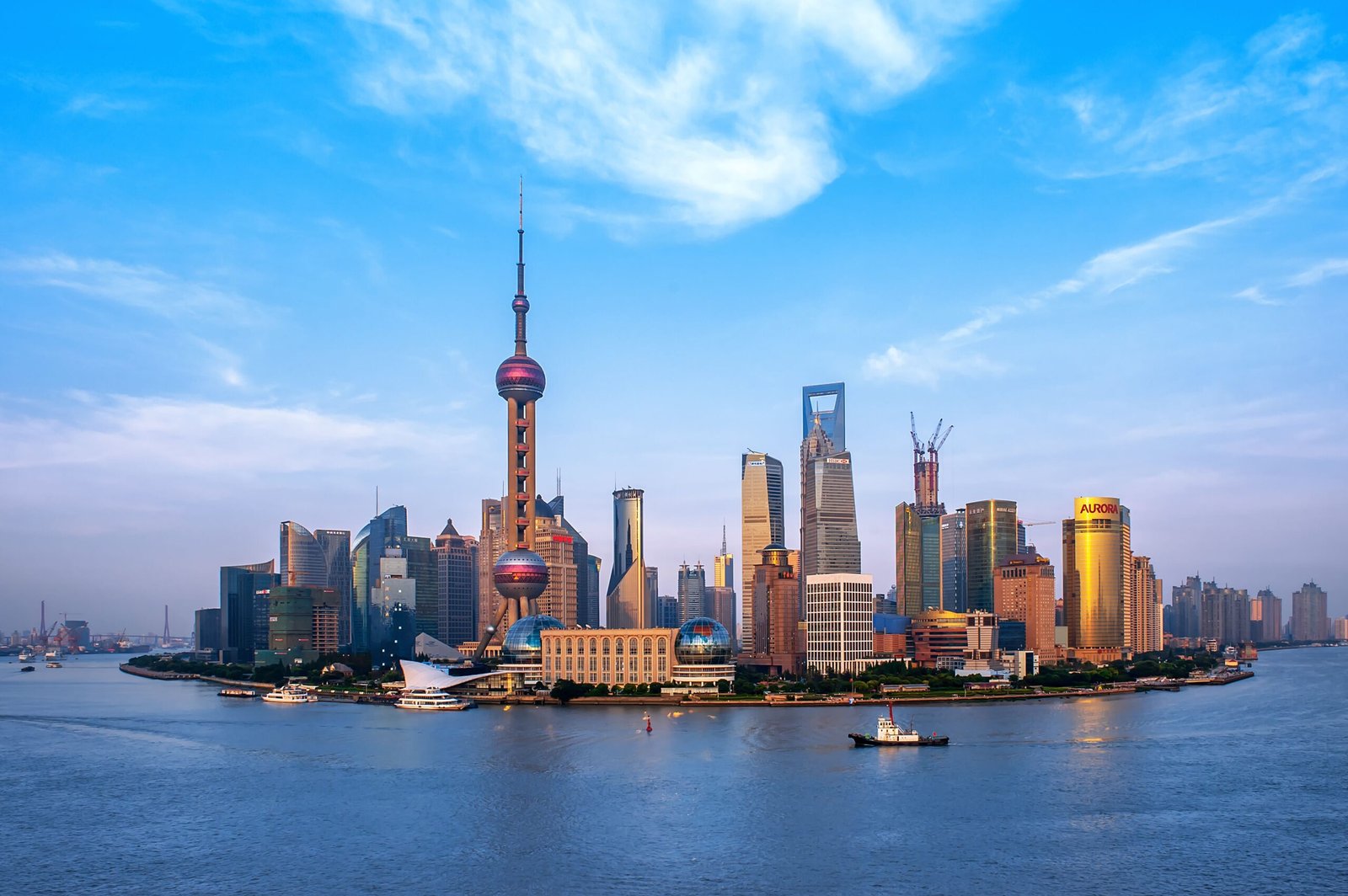
Situated at the mouth of the Yangtze River Delta, this sprawling metropolis on the eastern coast represents the beating heart of modern China—a place where innovation, entrepreneurship, and global culture converge. Towering skyscrapers rise above Lujiazui’s financial district, while along the Bund, rows of colonial-era buildings whisper stories of the city’s days as an international port on the Silk Road of the Sea. Few places capture the dialogue between ancient China and global modernity as vividly as Shanghai.
Whether you’re sipping artisan coffee in a stylish café, riding high-speed elevators to rooftop bars with panoramic views, or exploring temples hidden among futuristic malls, Shanghai is a city of constant contrasts. You’ll find Confucian temples standing beside art-deco landmarks, and traditional Chinese street food stalls next to Michelin-star restaurants. This unique East-meets-West fusion defines Shanghai’s identity—a cosmopolitan city that celebrates Chinese culture while embracing the global lifestyle.
For au pairs, international students, and young professionals, Shanghai offers endless chances for personal growth and cross-cultural learning. You can study Mandarin Chinese at top institutions like Fudan University or Shanghai Jiao Tong University, join local meetups, and engage with a thriving Chinese art scene—from galleries in M50 Creative Park to the Shanghai Museum, which houses relics from the Ming and Qing dynasties. Neighborhoods like Xuhui, Jing’an, and the French Concession remain especially popular among expats, offering leafy streets, European-style cafés, and a slower rhythm of life away from the financial rush.
Although Shanghai is more futuristic and less traditional than cities such as Xi’an or Chengdu, that’s exactly what makes it so magnetic. It’s the birthplace of a new generation of Chinese innovators and entrepreneurs, whose creativity bridges technology, sustainability, and Confucian values of harmony and diligence. For au pairs, this duality offers a fascinating rhythm: mornings spent helping a Chinese family with English lessons, afternoons exploring art exhibitions or Buddhist temples, and evenings discovering live music, rooftop terraces, or hidden speakeasies in restored industrial spaces.
Thanks to its large international community, Shanghai is one of the easiest cities in China for foreigners to adapt to. English-friendly services, international schools, bilingual signage, and multicultural events make life smooth even for newcomers. Yet, beyond the comfort of modern amenities, the city still invites you to experience Chinese customs, festivals, and traditions that keep its cultural roots alive.
In short, Shanghai embodies momentum, ambition, and contrast. It may not have the quiet charm of smaller historic towns, but if you’re looking for a place where global culture meets Chinese innovation, and where every sunrise promises new possibilities, Shanghai absolutely deserves a spot on your list.
4. Xi’an – Explore the Roots of Chinese Civilization
For those fascinated by China’s ancient history, Xi’an is an essential destination. As one of the Four Great Ancient Capitals of China, Xi’an holds a central place in the country’s historical and cultural heritage. Once known as Chang’an, it served as the eastern starting point of the legendary Silk Road, connecting Chinese civilization with the Middle East and Europe. Over the centuries, Xi’an was the capital of several powerful dynasties—including the Qin, Han, and Tang—each leaving behind temples, palaces, and philosophies that continue to shape Chinese identity today.
Its most famous site, the Terracotta Army, is a breathtaking testament to the grandeur of Emperor Qin Shi Huang, the first ruler to unify China in 221 BCE. Thousands of life-sized warriors, horses, and chariots were buried to protect him in the afterlife—a reflection of ancient Chinese beliefs in immortality and cosmic order. Declared a UNESCO World Heritage Site, the site embodies the craftsmanship, military precision, and spiritual vision that define ancient China.
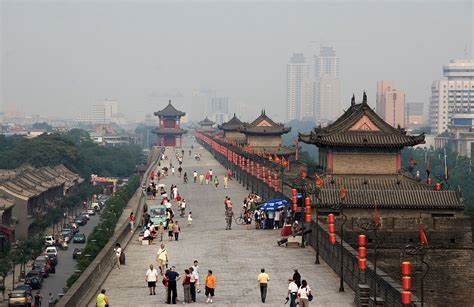
Yet Xi’an is far from being just a relic of the past. Stroll along the ancient city wall, one of the best-preserved fortifications in all of China, and you’ll see locals biking, flying kites, and enjoying the sunset over a city that bridges dynastic tradition and modern life. Explore the Muslim Quarter, where the aroma of Shaanxi cuisine—spicy lamb skewers, roujiamo, and hand-pulled noodles—fills the air, symbolizing the city’s centuries of cultural exchange. Visit landmarks like the Big Wild Goose Pagoda, built to store Buddhist scriptures during the Tang dynasty, or the Great Mosque of Xi’an, where Islamic architecture blends harmoniously with Chinese art and Confucian harmony.
For au pairs, students, and Mandarin learners, Xi’an offers an unmatched blend of historical depth and youthful energy. The presence of top universities and research institutes gives the city a vibrant, intellectual atmosphere. It’s common to find modern cafés, calligraphy studios, and bookshops tucked between ancient alleyways and Confucian temples, creating an inspiring balance between old and new China. This environment is ideal for curious minds eager to dive into Chinese language, art, and philosophy beyond the surface.
Living in Xi’an as an au pair means becoming part of this cultural dialogue. You might discuss Tang poetry over a bowl of biangbiang noodles, help your host children study the Qin dynasty, or exchange language lessons with Chinese students eager to practice English. Life here moves at a slower, more reflective pace than in Shanghai or Beijing, which makes it perfect for Mandarin immersion, personal growth, and building deep human connections.
Located in central China, Xi’an also serves as a natural hub for exploration. From here, you can travel to nearby Mount Hua, one of China’s five sacred Taoist mountains, or take short trips to Luoyang and Pingyao, other jewels of Chinese history. In short, Xi’an isn’t just a destination—it’s a gateway to understanding China’s soul, a place where empires, monks, and merchants once crossed paths, and where every traveler and au pair can write their own story amid the echoes of ancient China.
5. Hangzhou – Serenity and Romance by the Lake
Hangzhou is often described as one of the most romantic and tranquil cities in China, and it’s easy to understand why.
Famous for its breathtaking West Lake (Xī Hú), this ancient city has long been celebrated as a masterpiece of Chinese landscape design. Surrounded by forested hills, stone bridges, pagodas, and lotus ponds, West Lake—a UNESCO World Heritage Site—has inspired countless poets, painters, and emperors throughout Chinese history. From misty spring mornings to golden autumn sunsets, the lake embodies the timeless harmony between humans and nature so central to Confucianism and Taoism. It’s no wonder Marco Polo once called Hangzhou “the finest and most splendid city in the world.”
More than just scenic beauty, Hangzhou represents the spiritual heart of traditional Chinese culture. It’s the birthplace of Longjing (Dragon Well) tea, one of China’s most revered green teas, deeply rooted in the Song dynasty’s tea rituals. As an au pair in Hangzhou, you might be invited by your host family to a traditional tea ceremony, learning how each gesture reflects respect, patience, and mindfulness—a living expression of Buddhist and Confucian philosophy. Many families still visit tea plantations nestled in the lush Meijiawu or Longjing villages, where terraces of emerald-green leaves stretch across the hillsides.
For international au pairs, exchange students, and Mandarin learners, Hangzhou offers an ideal rhythm—balancing modern comfort with ancient tranquility. High-speed trains and a clean, efficient metro connect the city to Shanghai and Suzhou, yet Hangzhou retains a slower, more poetic pace. Here, you can easily combine language learning with daily immersion: chatting with locals in teahouses, reading Tang poetry by the lakeshore, or visiting the China National Silk Museum to explore centuries of craftsmanship.
In daily life, Hangzhou radiates a family-friendly warmth. Your host family might take peaceful strolls along West Lake, attend traditional Chinese opera, or explore ancient temples like Lingyin Temple, one of the most revered Buddhist monasteries in China, dating back to the Eastern Jin dynasty. The temple’s incense-filled courtyards and stone carvings offer a glimpse into the spiritual depth that defines Chinese civilization.
Culturally, Hangzhou embodies elegance and refinement—values celebrated since the Southern Song dynasty, when it served as an imperial capital. From calligraphy studios and classical gardens to silk weaving workshops and art galleries, the city nurtures creativity and reflection. It’s a wonderful place to deepen your understanding of Chinese aesthetics, practice Mandarin, and enjoy a balanced lifestyle surrounded by natural beauty.
Whether you’re drawn to tea traditions, ancient temples, or the quiet poetry of West Lake, Hangzhou invites you to slow down and reconnect—with nature, with your host family, and with the deeper rhythms of Chinese culture. For many au pairs and students, it’s not just a destination—it’s a sanctuary of inspiration, balance, and cultural discovery.
Choose Your City, But Let Chengdu Choose You
China is not just one country—it’s a world of its own.
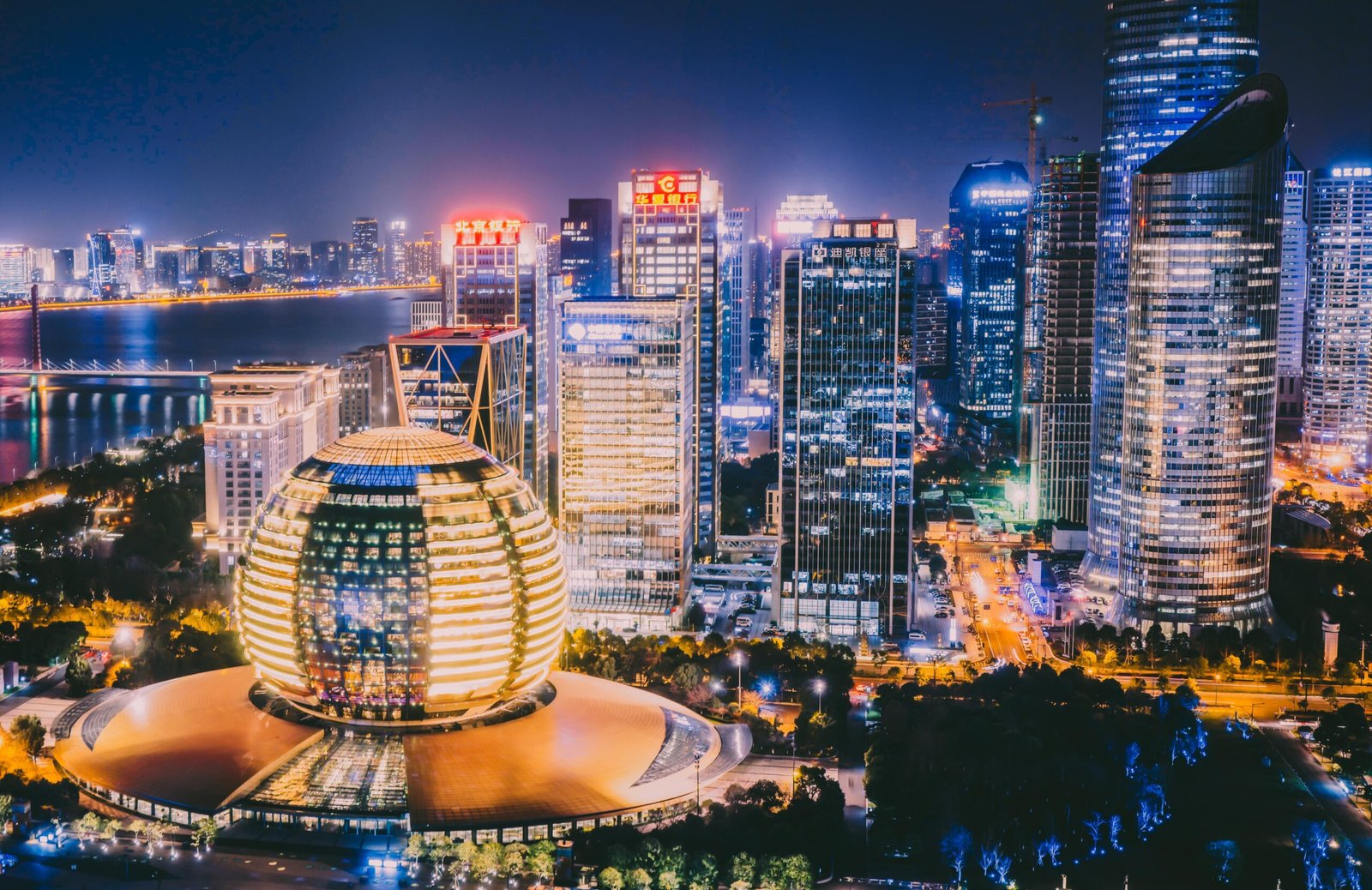
From the imperial majesty of Beijing to the futuristic skyline of Shanghai, the ancient splendor of Xi’an to the poetic calm of Hangzhou, each city reveals a new dimension of Chinese civilization. Together, they form a living mosaic of history, philosophy, art, and daily life. Whether you’re a traveler, a Mandarin learner, or an au pair on a journey of cultural exchange, the city you choose will shape how you understand—and fall in love with—China’s rich culture.
Yet if there is one place that truly embodies authentic Chinese life, it’s Chengdu. It may not be the biggest or the busiest, but it is the most human. Here, time slows down. Friendships grow naturally, language learning becomes effortless, and the essence of Chinese culture—from tea rituals to family gatherings—comes alive in everyday moments. Chengdu teaches you that real discovery isn’t found in sightseeing, but in sharing meals, laughing with locals, and living traditions that have endured since the Tang dynasty.
For au pairs, students, and first-time travelers, Chengdu offers something rare: a sense of belonging. It’s where personal growth meets cultural understanding—a city that welcomes you not as a visitor, but as a participant in its rhythm. It’s a place to learn Mandarin, explore Buddhist temples, taste Sichuan cuisine, and experience what it truly means to connect with Chinese people on a deeper level.
At Masons Au Pair, we’ve seen how life in Chengdu transforms perspectives. Participants return home with new language skills, lasting friendships, and a profound appreciation for cross-cultural exchange. They discover that being an au pair in China isn’t just about travel—it’s about growth, empathy, and transformation.
If you’re ready to go beyond the guidebooks and experience China from the inside, start your journey where modern life meets ancient wisdom.
✨ Chengdu is your gateway—and your new home awaits.