
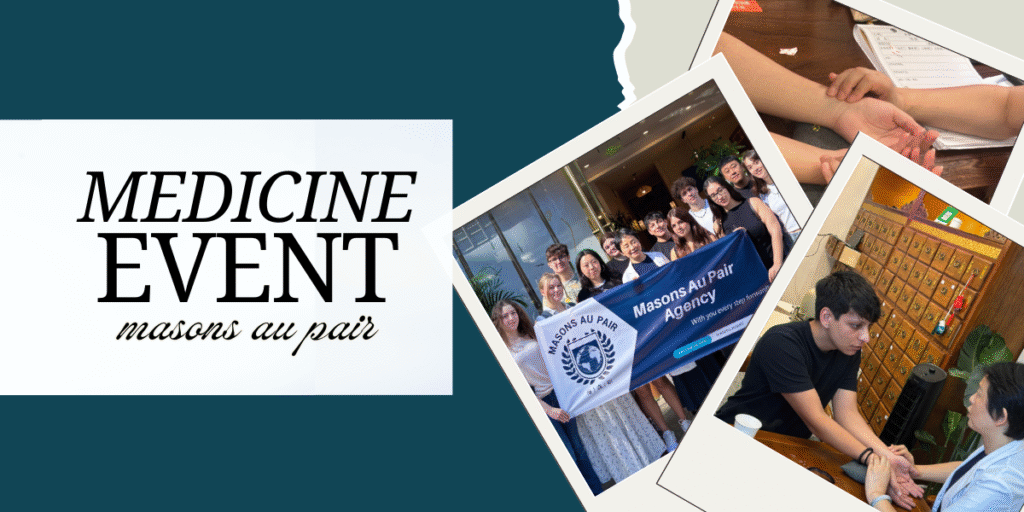
Traditional Chinese Medicine (TCM) is one of the world’s oldest systems of traditional medicine, still widely practiced today as both complementary and alternative medicine. In China, people regularly combine conventional medicine with herbal therapies, acupuncture treatment, Tai-chi, and Qigong to support balance, prevent illnesses, and maintain overall well-being. For au pairs and international students, attending a Traditional Chinese Medicine event is an eye-opening cultural and educational experience.
This kind of workshop is perfect for anyone curious about oriental medicine, holistic health, and mind–body approaches that are deeply integrated into Chinese daily life.
1. Foundations of Traditional Chinese Medicine and Holistic Health
During the event, participants were introduced to the basic philosophy behind Traditional Chinese Medicine. A licensed TCM practitioner explained how health is viewed holistically: instead of treating only symptoms, TCM looks at the whole person—body, mind, emotions, and lifestyle. This integrative perspective is very different from many conventional medicine models.
Key concepts covered:
- The idea of Qi, the vital energy that flows through the body
- The balance of Yin and Yang and how imbalance may lead to illnesses
- The Five Elements theory used to understand different organ systems
- How TCM is practiced today as a form of complementary medicine alongside hospital care
For many international visitors, this was their first contact with a holistic, mind–body model of health, where emotional stress, diet, sleep, and movement all influence energy flow and physical symptoms.
2. Discovering Chinese Herbs and the Materia Medica
The workshop also offered a hands-on introduction to the rich world of Chinese herbs. Guided by an experienced herbalist, participants explored samples from the traditional materia medica—the catalog of plant, mineral, and animal substances used in Chinese medicine.
What participants experienced:
- Smelling and touching classic herbs used for digestion, sleep, and immunity
- Learning how herbal formulas are combined to support specific patterns of imbalance
- Understanding the difference between single-herb teas and complex prescriptions
- Seeing how herbal medicine is often used as an alternative-medicine option before stronger drugs
The practitioner emphasized that TCM focuses on gradual, natural support rather than quick fixes, and that herbal therapies are often used as complementary-medicine alongside conventional treatments for chronic issues like fatigue, stress, or mild arthritis.
3. Acupuncture, Acupressure, and Moxibustion Demonstrations
One of the most fascinating parts of the event was the live demonstration of acupuncture treatment. An experienced acupuncturist showed how ultra-fine acupuncture needles are gently inserted at specific acupuncture points along the body’s meridians to regulate Qi and reduce pain.
Topics covered during the demo:
- How acupuncture is used for headaches, stress, back pain, and arthritis
- The difference between acupressure, acupuncture, and moxibustion (warming points with burning mugwort)
- Current research and clinical trials exploring acupuncture’s effects on chronic pain, insomnia, and anxiety
- Why many hospitals in China offer integrative medicine clinics that combine Western and oriental medicine
Participants could ask questions about safety, placebo effects, and how acupuncture compares to conventional therapies. For many, it helped demystify a practice they had only seen in photos or documentaries.
4. Tai-chi and Qigong: Moving Meditation for Everyday Balance
The event also included a gentle session of Tai-chi and Qigong—two movement practices closely linked to Traditional Chinese Medicine. These slow, flowing exercises are viewed as “meditation in motion” and are used to harmonize breathing, posture, and energy circulation.
Benefits highlighted by the instructor:
- Improved balance, coordination, and body awareness
- Stress reduction through mindful breathing and movement
- Support for joint mobility, especially in people with stiffness or mild arthritis
- Everyday mind–body practice that complements both TCM and conventional medicine
For au pairs and international students, trying Tai-chi and Qigong together created a sense of community and offered a practical way to integrate Chinese wellness routines into their daily life abroad.
5. Comparing Conventional Medicine and Integrative Medicine Approaches
Throughout the workshop, the practitioners encouraged participants to think critically about health systems. Rather than replacing conventional medicine, TCM is often used as integrative medicine, combining the strengths of both worlds—modern diagnostics and drugs with ancient therapies like herbs, acupuncture, and therapeutic movement.
Discussion points included:
- How people in China choose between hospital care and traditional medicines
- The role of lifestyle, diet, and emotional balance in preventing illness
- When complementary therapies can support recovery, and when only conventional treatment is appropriate
- The importance of working with qualified practitioners, not self-diagnosing with herbs or therapies
This open, balanced discussion helped participants understand the place of complementary and alternative medicine in a modern healthcare system, without exaggeration or unrealistic claims.
6. A Rich Cultural Experience for Au Pairs and Study-Abroad Participants
Beyond the medical content, the Traditional Chinese Medicine event was a powerful cultural experience. For many au pairs, this was their first time speaking directly with TCM practitioners, watching acupuncture in person, and touching real medicinal herbs used in clinics and homes across China.
Why this event is ideal for international participants:
- It deepens cultural understanding beyond language and food.
- It connects theory with hands-on activities and live demonstrations.
- It encourages questions about health beliefs in different cultures.
- It gives au pairs new topics to discuss with their Chinese host families.
Experiences like this turn a simple stay abroad into a meaningful, experiential journey where you learn not only about China, but also about different ways of thinking about health, balance, and the mind–body connection.
Conclusion
The Traditional Chinese Medicine workshop combined education, cultural exchange, and holistic wellness. By exploring acupuncture, Chinese herbs, Tai-chi, Qigong, and the philosophy behind complementary and alternative medicine, participants gained a deeper understanding of how health is practiced and experienced in China.
For au pairs, exchange students, and anyone interested in integrative medicine, events like this are a valuable opportunity to learn from qualified practitioners and experience oriental medicine in an authentic, respectful way.
If you’d like to join future cultural activities like this during your time abroad, discover how the Masons Au Pair program connects participants with meaningful, educational, and wellness-focused experiences across China.
Understanding Eastern Medicine and Its Modern Applications
During the event, participants also explored how Eastern medicine and modern medicine can work together. While Western medical treatments like chemotherapy or conventional care focus on treating symptoms directly, Traditional Chinese Medicine aims to support the whole body through herbal remedies, lifestyle adjustments, and gentle alternative therapy practices.
The practitioner explained how Chinese herbal medicine can be used to relieve common issues such as nausea, headache, fatigue, or digestion imbalance. These herbal therapies, sometimes combined with acupuncture treatment or medical acupuncture, help stimulate circulation and restore harmony between Yin and Yang.
Additional therapies introduced during the workshop:
- Cupping therapy used to relax muscles and stimulate blood flow
- Tui na massage, a traditional Chinese hands-on technique
- Qigong and slow movement exercises to support life-force and harmony
- Chinese herbal medicine formulas to support fertility, sleep, or immunity
- Herbal products used by Chinese families for everyday wellness
The practitioner also discussed how TCM interprets symptoms differently from Western practice. Instead of focusing only on the physical sign, such as a headache, practitioners analyze overall patterns of imbalance, emotional stress, digestive issues, or lifestyle habits.
Scientific Evidence, Safety, and Professional Practice
To address common questions, the event included a conversation about scientific evidence and the role of trained health professionals in both Eastern and Western medical systems. Participants learned that acupuncture clinics must follow strict safety rules, especially regarding the use of acupuncture needles and sterilized tools.
The practitioner emphasized that many hospitals in China now offer integrative medicine departments combining modern clinical care with TCM therapies. These departments may use acupuncture to relieve chemotherapy-related nausea, chronic pain, stress, and insomnia. This approach is increasingly recognized by researchers and medical communities around the world.
The workshop reinforced the idea that Traditional Chinese Medicine is not meant to replace Western medicine, but to serve as a complementary method that can support recovery, relaxation, and long-term well-being when guided by a qualified professional.