
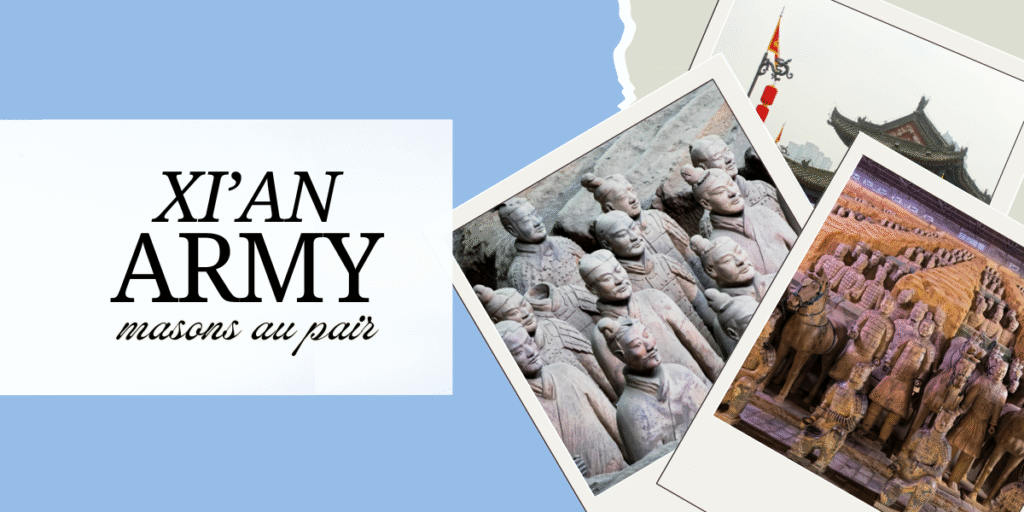
The Terracotta Army, also known as the Terracotta warriors, is one of the most extraordinary archaeological discoveries of all time. For au pairs, exchange-students, and international students living in China through a homestay program, visiting this ancient site in Shaanxi province offers a rare chance to connect with thousands of years of ancient Chinese history. Located near Xi’an, the capital of the former Han dynasty, the army is part of the massive mausoleum of Qin Shi Huang—the first Emperor of China who unified the country after the long Warring States period.
This guide is perfect for anyone living with a host family or participating in a student exchange program who wants to explore China’s historical treasures during their year abroad. Whether you go with your host parents, siblings, or your local coordinator, this is one of the most unforgettable cultural trips you can make.
1. The Discovery: When History Was Unearthed
In 1974, local farmers were digging a well and unexpectedly unearthed fragments of clay—pieces that turned out to be part of a vast underground army. This accidental digging led archaeologists to uncover the gigantic burial complex of Qin Shi Huang, including life-sized terra cotta warriors made of fine pottery, bronze weapons, and even chariots.
Key elements of the discovery:
- Thousands of life-sized Terracotta warriors
- Bronze weapons preserved for over two millennia
- Clay horses, wooden chariots, and ceremonial items
- Chambers linked to the emperor’s funerary mound and central tomb
Historians describe the discovery as one of the most significant archaeological treasures of the last millennia.
2. Why the Terracotta Army Was Built
To understand this monumental project, you need to know the story of Qin Shi Huang, the powerful ruler who united China in 221 BCE after conquering all rival states during the violent Warring States era. His reign brought political unification, standardized laws, currency, language, and even early versions of the Great Wall of China.
The emperor believed that his authority should continue in the afterlife. This led to the construction of a gigantic mausoleum surrounded by a full underground army—soldiers, archers, generals, and chariots—tasked with protecting him forever.
The Terracotta Army represents:
- The political power of the first Emperor of China
- The artistic mastery of ancient pottery craftsmen
- The military organization of the Warring States period
- The emperor’s ceremonial quest for immortality
Some legends even mention his concubines and court officials buried nearby, though this remains debated by historians.
3. Exploring the Pits: A Life-Sized Army Frozen in Time
The Terracotta Army consists of several pits, each revealing different military formations. Walking into Pit 1 feels like entering an enormous ancient battlefield—hundreds of life-sized clay warriors, every face unique, arranged in precise formations.
What you’ll see in each pit:
- Pit 1: The main army—infantry soldiers, archers, and officers
- Pit 2: Cavalry units, kneeling archers, and elaborate bronze weapons
- Pit 3: The command center, including high-ranking generals and war chariots
Although many warriors have been restored, some remain partially buried, allowing you to witness the excavation process firsthand. Watching archaeologists continue their delicate work adds a powerful “living history” dimension to the visit.
4. The Mausoleum and the Emperor’s Tomb
The Terracotta Army is only one part of the emperor’s vast mausoleum. The central tomb—a massive pyramid-shaped mound—has not been fully opened due to preservation concerns. Ancient texts describe rivers of mercury, hidden treasures, and elaborate funerary traps created to protect the emperor’s throne in the afterlife.
Although not all areas are open to the public, walking around the site helps you understand the immense scale of ancient dynastic power. The entire mausoleum is believed to be larger than many modern cities.
5. Terracotta Warriors vs. the Great Wall: Two Symbols of Power
During your year abroad in China, you will hear two monuments repeatedly: the Great Wall of China and the Terracotta warriors. Both were built during ancient dynasties to secure and protect imperial power, but each reflects a different vision of the emperor:
- The Great Wall shows the emperor’s desire to defend the land he conquered.
- The Terracotta Army displays his plans to dominate even the afterlife.
Seeing both sites is like reading two chapters of the same story—one above the ground, one hidden beneath it.
6. Why This Visit Matters for Au Pairs and Exchange Students
If you’re living in a homestay during your exchange year, the Terracotta Army visit is more than a simple sightseeing tour. It’s a conversation starter, a cultural bridge, and a moment that brings you closer to your host family.
You will learn:
- How ancient dynasties shaped modern China
- Why Chinese students study the Warring States period at school
- How families pass down pride in national history
- Why Xi’an is considered the birthplace of Chinese civilization
Your host siblings may even share what they learned about the army in their high school program, creating a mutual cultural exchange moment.
7. Practical Tips for Visiting the Terracotta Army
- Go early to avoid crowds
- Book tickets in advance (peak seasons can be intense)
- Wear comfortable shoes—you’ll walk a lot
- Read a bit about the Warring States beforehand to understand the context
- Visit the museum area to see original bronze weapons and pottery details
Xi’an itself is a beautiful city, filled with ancient walls, local snacks, and friendly people. It’s one of the best places in China to explore as an au pair or foreign exchange student.
Conclusion
The Terracotta Army is a masterpiece of ancient Chinese engineering, artistry, and imperial ambition. From its life-sized pottery soldiers to its mysterious mausoleum and hidden treasures, the site reveals the immense power of the first Emperor of China and the legacy that shaped millennia of history.
For au pairs, exchange-students, and international students living in China, this visit is a key moment of cultural immersion and connection—a real opportunity to understand how dynasties, rulers, and ancient traditions continue to influence daily life in modern China.
Whether you’re here through a homestay, exchange program, or educational travel experience, exploring Xi’an's Terracotta warriors is one of the most unforgettable chapters of your year abroad.