
Spending December in Mainland China is a unique experience. While American culture focuses on the Gregorian-calendar holidays, our au pairs in Chengdu are currently living through a fascinating transition. We recently celebrated the Winter solstice (Dongzhi), a period that marks the arrival of the coldest days but also the countdown to the most important public-holiday: the Spring festival. To bridge these two worlds, Masons Au Pair organized a massive Christmas dinner to bring our welcoming community together before the New year celebrations begin in earnest.
Our Christmas event wasn't just about Secret Santa; it was a deep dive into language and culture. We gathered our international students and au pairs to share a meal that felt like a bridge between the West and the Ancient chinese heart of Sichuan. It was the perfect moment to reflect on the passing Solar-year while looking forward to the upcoming Chinese lunar new year.
1. A Festive Reunion: Catching the Holiday Spirit
The energy at the dinner was incredible. For many, this was the first time they felt a true sense of good fortune away from their home-country. We aren't just an exchange program that pays a stipend; we are a support system. If you watch the video below, you'll see the festive atmosphere where everyone was busy sharing folk stories from their own cultures while embracing traditional chinese hospitality.
Christmas vibes in Chengdu: A warm-up for the Lunar New Year festival.
During the meal, we talked about the upcoming New year parade and the festivities that will soon fill the streets. Our au pairs are already excited to see their first Lion dance and Dragon dance demonstrations, which are auspicious symbols meant to ward off bad-luck and bring prosperity for the Lunar year ahead.
2. Sichuan Flavors and Zodiac Talks
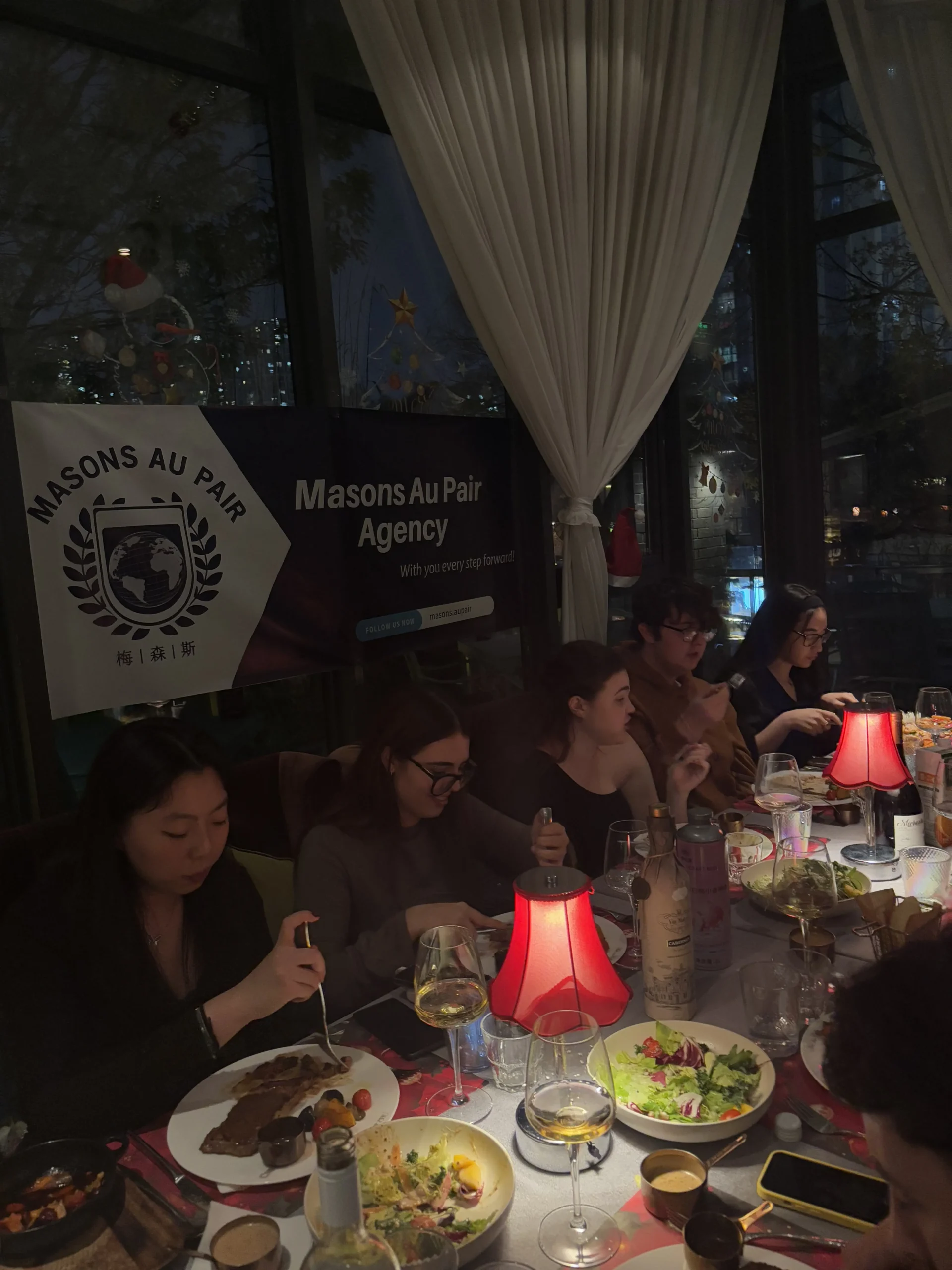
Instead of a Cantonese style dim sum or a Western roast, we went full Sichuan. The table was covered in dumplings and spicy local favorites. In Chinese culture, the First-day of any celebration starts at the table. We sat around the round tables—the symbol of reunion—and spent hours talking about the Chinese zodiac.
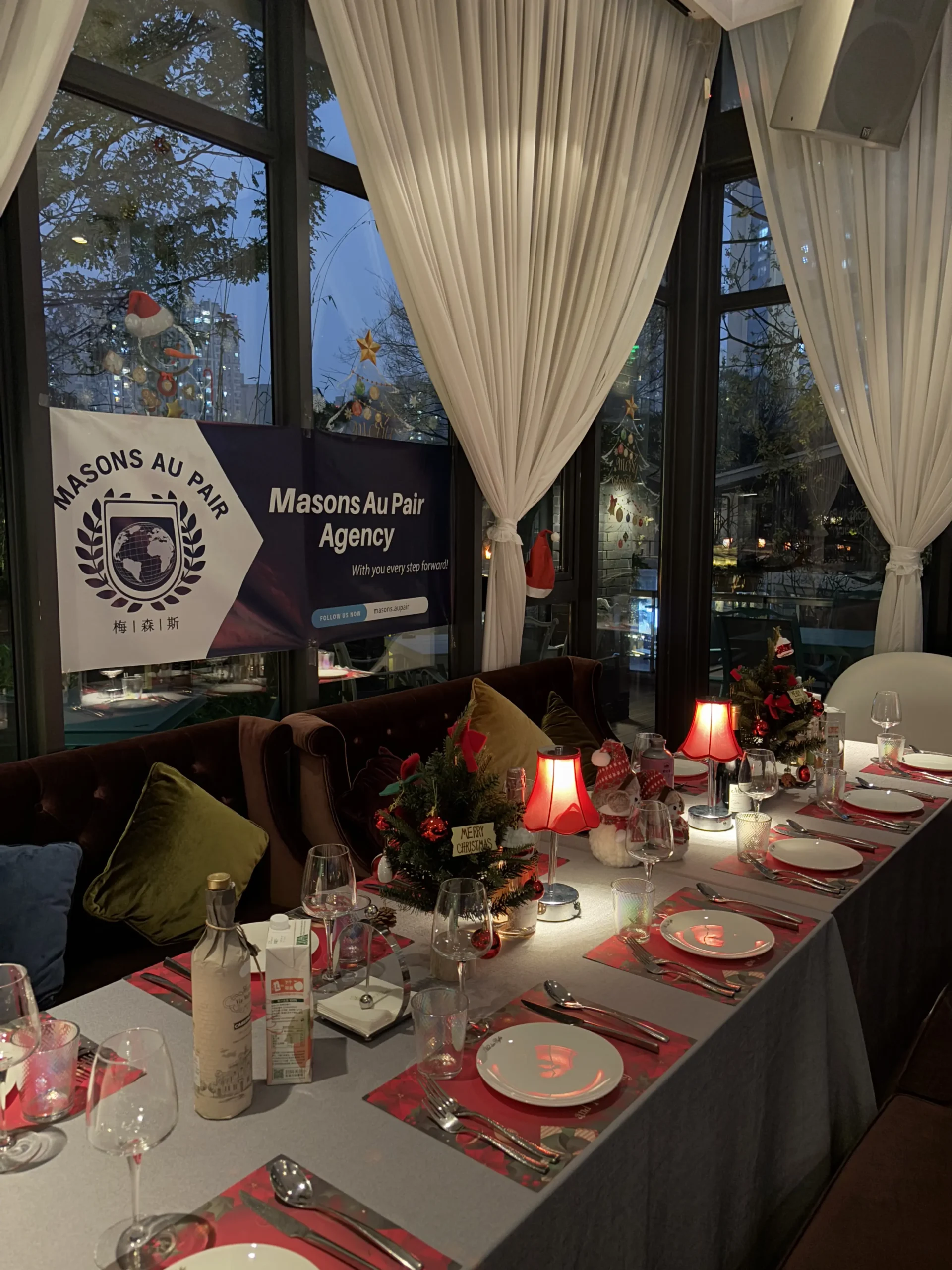
Sharing more than just food: a lesson in the Chinese lunar calendar.
Whether you were born in the year of the Rat, the Monkey, the Rooster, or the Pig, everyone wanted to know their zodiac predictions for the Year of the rat or whatever animal the Chinese-calendar brings next. These conversations are for chinese families a daily ritual, and seeing our au pairs embrace them was a beautiful demonstration of true cultural integration.
3. Preparing for the Lantern Festival
As we look past Christmas, the focus shifts to the Chinese new year celebration. Our au pairs are already planning to learn martial arts or calligraphy to write their own decorations for their host families' doors. This dinner was the starting point for a lunar-month full of excitement, leading up to the grand Lantern festival.
The New Moon of the first Lunar year month will bring even more celebrations. We want our participants to see every temple, light every lantern, and understand the deep respect for ancestors that defines the Chinese People. From the Emperor’s history to the modern street parade, Masons ensures you experience it all.
4. A Global Community in the Sichuan Capital
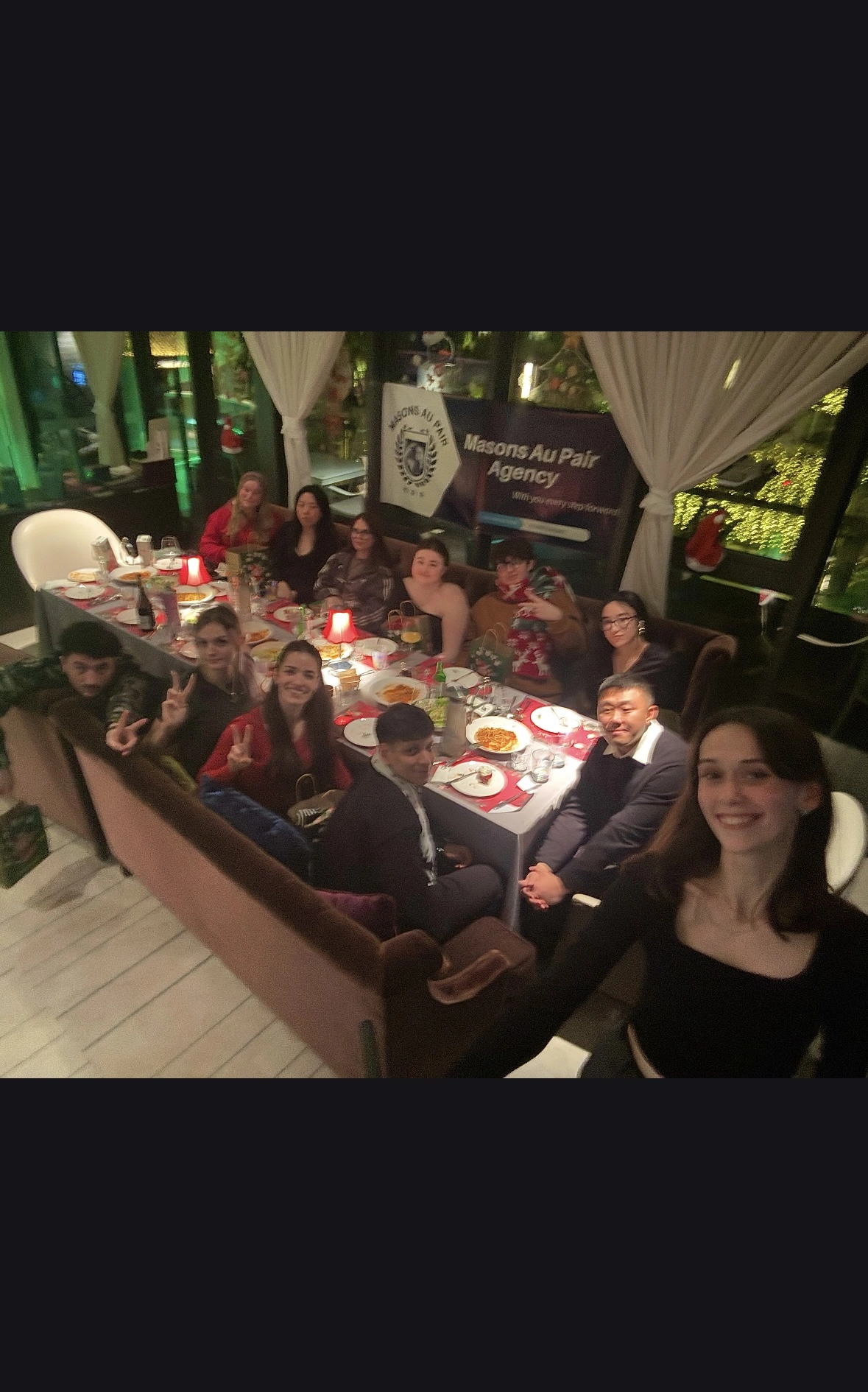
By the time the dinner ended, our international community felt stronger than ever. No matter how much bad-luck the world might throw at us, having a group of friends to celebrate chinese new year with makes the homestay program truly rewarding. We are proud to be the bridge for for chinese new year and Christmas alike.
A full house waiting for the next New Year festival to begin.
FAQ: Christmas and the Lunar Year
Is Christmas as big as the Chinese new year festival?
In Mainland China, the New year festival is much larger as it is the primary public-holiday. However, Christmas is a great time for festive gatherings and celebrations within the expat and au pair community.
What should I expect during the Chinese new year celebration?
Expect a lot of fireworks, family decorations, and incredible Lion dance performances. It is a time for good fortune and honoring ancestors according to the Chinese lunar calendar.
Do we get time off for the Winter solstice?
While the Solstice is an important Folk tradition where families eat dumplings, it is not a public-holiday. The real break happens during the Lunar new year.
Conclusion
Whether you are celebrating a Gregorian Christmas or getting ready for the New year parade, being an au pair in Chengdu is an adventure. Join Masons Au Pair to experience the best of Chinese culture, from the Winter solstice to the Lantern festival. We have a seat for you at our next auspicious dinner!