
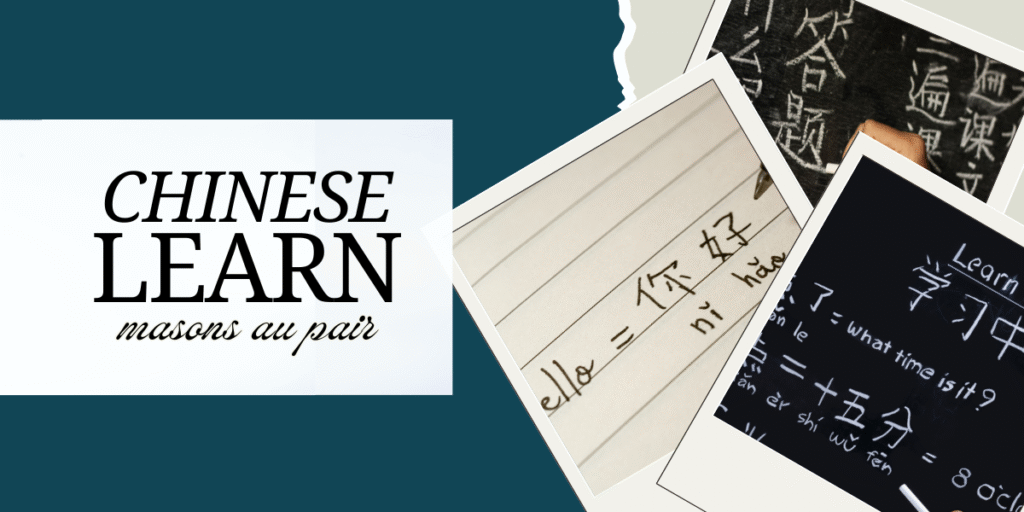
Many people want to learn Mandarin and discover Chinese language and culture, but one question always comes first: can you become an au pair in China if you don’t speak Chinese? The short answer is yes. You can absolutely join an au pair program in Mainland China as a complete beginner. In fact, most learners and international students who come to study Chinese in China start with zero Mandarin language.
But the real question is not “can you survive?” The real question is: can you really learn a language, build real comprehension, and become fluent in speaking Chinese? This is where the difference between simple language immersion and a real language learning program becomes very important.
At Masons Au Pair, we don’t just offer a homestay program. We combine daily life with a Chinese host family, professional Chinese classes from our partner language school, and a real language study structure. The result is an experience very similar to a serious study abroad or Chinese learning program in places like Beijing, Shanghai, or Chengdu.
1. Is Mandarin the Official Language of China?
Yes. Mandarin Chinese (also called Putonghua) is the official language of China. It is the language taught in schools, used in media, and spoken in cities like Beijing. However, China also has many dialects, such as Cantonese in the south or other regional varieties.
This means that when you learn Mandarin, you are learning the main language that allows you to communicate everywhere in the country, including Taiwan and most major cities.
2. Do You Need to Speak Chinese Before Coming?
No. You do not need to speak Chinese before joining the program. Most families do not expect their au pair to be a native speaker. Many families actually prefer a non-native English speaker so their children can practice English skills.
This means you can arrive as a learner of a second language. What matters is your motivation to learn a language, your interest in language and culture, and your willingness to follow a real language training path.
Important: Families don’t expect you to be fluent. They expect respect, seriousness, and a real desire to learn Mandarin Chinese.
3. What Does It Mean to Learn Mandarin as a Beginner?
Most people who come to learn Mandarin Chinese are beginners. They don’t know pinyin, they don’t understand the tonal system, they can’t read Chinese characters, and they don’t know Chinese grammar.
Unlike learning Spanish, German, or Italian, learning Chinese means learning a completely different system:
- Pinyin and tones
- Basic Chinese grammar
- Simplified Chinese characters
- Chinese writing and reading and writing
- Daily Chinese words and expressions
- How to speak Chinese in real life
This is a real process of language acquisition, very similar to what Confucius Institutes or serious language programs teach.
4. How Do Chinese Classes and Textbooks Help?
At the beginning, most learners use a textbook, a Chinese dictionary, flashcards, and guided exercises. This is what builds your comprehension, your grammar, and your basic language skills.
Our partner language school provides structured Chinese classes, with professional Chinese teachers, and optional tutor or tutoring sessions if you want to progress faster.
5. Au Pair vs Language School: The Smart Combination
A traditional language school is perfect for structure, but often weak for real speaking Chinese. A homestay program is perfect for immersion, but often weak for grammar.
The best solution is to combine both:
- Language courses for structure
- Homestay immersion for real life practice
This is how serious study Chinese and learning Mandarin Chinese programs work.
6. How Fluent Can You Become?
You will not reach native-language or first-language level in one year. But you can become fluent enough for daily life and reach strong language proficiency.
- After 3 months: basic survival speaking Chinese
- After 6 months: real conversations and good comprehension
- After 12 months: strong confidence and solid Mandarin language level
7. The Real Risk: Staying in an English Bubble
Some people never really learn a language because they stay in an English-only environment. They don’t follow enough language lessons, don’t review their textbook, and don’t practice speaking Chinese.
This is why a real language program with professional language instruction is essential.
FAQ: Learning Mandarin in China
Is Mandarin the same in Beijing and other cities?
Yes. Mandarin is the official language. Local dialects exist, but everyone understands Mandarin.
Do I need to learn Cantonese?
No. Cantonese is a regional dialect. Mandarin Chinese is the national language.
Is this better than learning Chinese online or with Rosetta?
Yes. Chinese online tools or apps like Rosetta are useful, but nothing beats language immersion and daily practice.
Conclusion
You don’t need to speak Chinese to become an au pair in China. But if you really want to learn Mandarin, you need a serious language learning structure.
With Masons Au Pair, you get a real homestay program, professional Chinese classes, experienced Chinese teachers, and a complete language training path to truly learn Mandarin Chinese in China.
Join our Chinese learning and language immersion program and start learning Mandarin in China.