
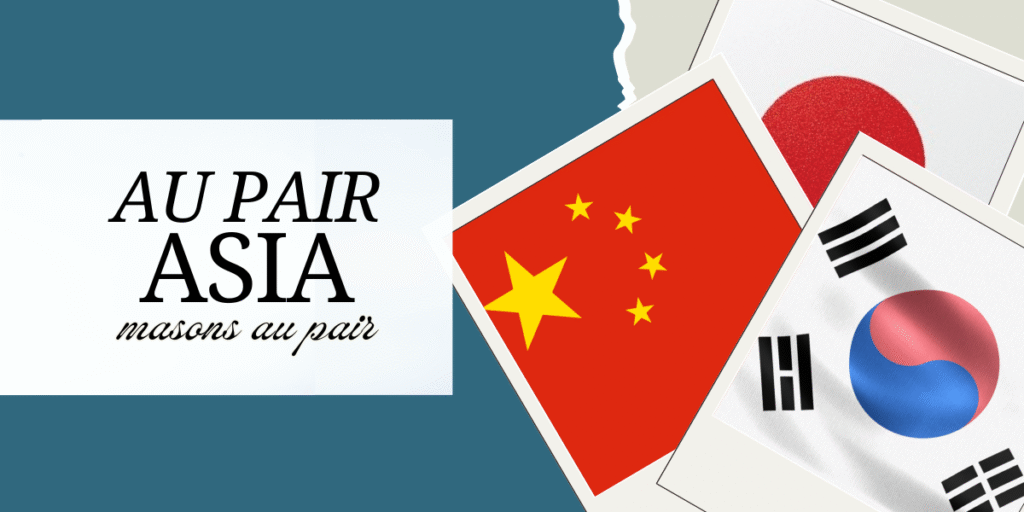
If you’re considering an au pair program in Asia, you’re probably looking for more than “a year abroad.” Asia is one of those regions where an au pair experience can feel like a full reset: new language, new food, new social codes, and a totally different daily rhythm inside a host family.
But Asia is also a big word. Being an au pair in Tokyo is not the same life as being an au pair in Bangkok or Chengdu. The cost of living, the visa situation, the kind of host families you’ll meet, and even what “being an au pair” means in practice can change a lot from one country to another.
So this article is here to help you choose intelligently. We’ll start with why Asia is so attractive for au pairs, then go through the most realistic destinations, explain the main visa/requirements logic, and finish with a clear comparison of programs.
Why Asia works so well for au pairs
There are a few reasons Asia keeps popping up as a dream region for au pairs. First, the cultural contrast is huge — which means the learning curve (and the memories) are huge too. Daily life is packed with small discoveries: family habits, food rituals, school routines, etiquette, neighborhood life.
Second, Asia is one of the best places to pick up a language that has real long-term payoff. Mandarin, Japanese, and Korean are career boosters in business, tech, education, tourism, and international relations. And even if you don’t come for the language, you often leave with a solid foundation just from immersion.
Finally, many Asian cities have a strong au pair fit: safe transport systems, family-centered lifestyles, and a cost of living that can be very comfortable compared to Western capitals.
Top destinations for au pairs in Asia (2025)
Here are the destinations that make the most sense today. Not because they’re the only options, but because they’re the most realistic in terms of host families, visas, and overall experience quality.
 🇨🇳 China
China
China has the most developed au pair ecosystem in Asia right now. There are many host families, programs are clearer, and it’s one of the only places where language classes are often included for free. Big cities are modern, safe, and very international.
 🇯🇵 Japan
Japan
Japan is incredible for culture and everyday organization, but programs are smaller and usually more competitive. Visas can be stricter and placements more selective. If you want Japan, plan earlier.
 🇰🇷 Korea
South Korea
Korea is growing fast thanks to international families and strong demand in Seoul/Busan. The vibe is very urban and social, but programs depend more on the host family, so having agency support matters.
 🇹🇭 Thailand
Thailand
Thailand is more “emerging” as an au pair destination, but the lifestyle can be amazing: friendly families, lower cost of living, and a warm social environment.
 🇻🇳 Vietnam
Vietnam
Vietnam is a solid choice if you want a fast-changing country, affordable living, and big cities with a relaxed vibe. Programs are expanding, so quality varies a bit more than China/Japan.
Visa & requirements (simple version)
Across Asia, the baseline requirements are pretty consistent: you need to be the right age, show you can communicate in English, and prove you have some experience with kids.
Typical requirements
- Age: usually 18–29
- Basic English communication
- Experience with children (babysitting, tutoring, siblings)
- Clean background check & medical fitness
Why visa clarity matters
Some countries treat au pairs as a clear category, others don’t. When the category is unclear, you depend on the host family’s setup or on case-by-case processing. That’s why structured programs are safer.
China is currently the most straightforward in this sense, especially when you go through a licensed agency.
Asia au pair program comparison
Instead of focusing only on allowance numbers (which vary by city and family), this comparison looks at what really changes your experience: visa clarity, program maturity, support, and lifestyle.
| Country | Visa Pathway | Language Classes | Program Availability | Cost of Living (relative) | Big-City Options | Support & Activities | Best For |
|---|---|---|---|---|---|---|---|
| China 🇨🇳 | Clear via licensed agencies | ✅ Free Mandarin | High | Moderate | Beijing, Shanghai, Chengdu | Strong partner support | Best overall value |
| Japan 🇯🇵 | Limited, stricter criteria | ❌ Typically not included | Medium (competitive) | Higher | Tokyo, Osaka, Kyoto | Good support; fewer slots | Culture lovers; organized cities |
| Korea 🇰🇷 | Limited, varies by host | ❌ Typically not included | Medium | Medium-High | Seoul, Busan | Moderate networks | K-culture immersion |
| Thailand 🇹🇭 | Evolving options | ❌ Not standard | Growing | Lower | Bangkok, Chiang Mai | Warm, community vibe | Budget-friendly lifestyle |
| Vietnam 🇻🇳 | Evolving options | ❌ Not standard | Growing | Lower-Medium | Hanoi, HCMC | Support improving | Emerging programs |
Why China stands out in practice
On paper, several Asian countries look appealing. In practice, China tends to be the destination where au pairs get the most complete experience with the least friction.
The combination is hard to beat: more host families, clearer legal pathways, strong big-city options, and free Mandarin classes in many placements. Even if your goal isn’t “learning Chinese,” the immersion ends up being a huge bonus.
Language progress feels automatic
Free classes plus daily life in Mandarin usually makes progress faster than you expect.
Urban life is safe and modern
Cities like Chengdu, Shanghai, or Beijing are easy to navigate and very foreigner-friendly.
Benefits are “complete”
Housing, meals, cultural activities and support are more standardized compared to emerging markets.
Programs are structured
Licensed agencies + clear visas = fewer surprises once you land.